Bees, Wasps
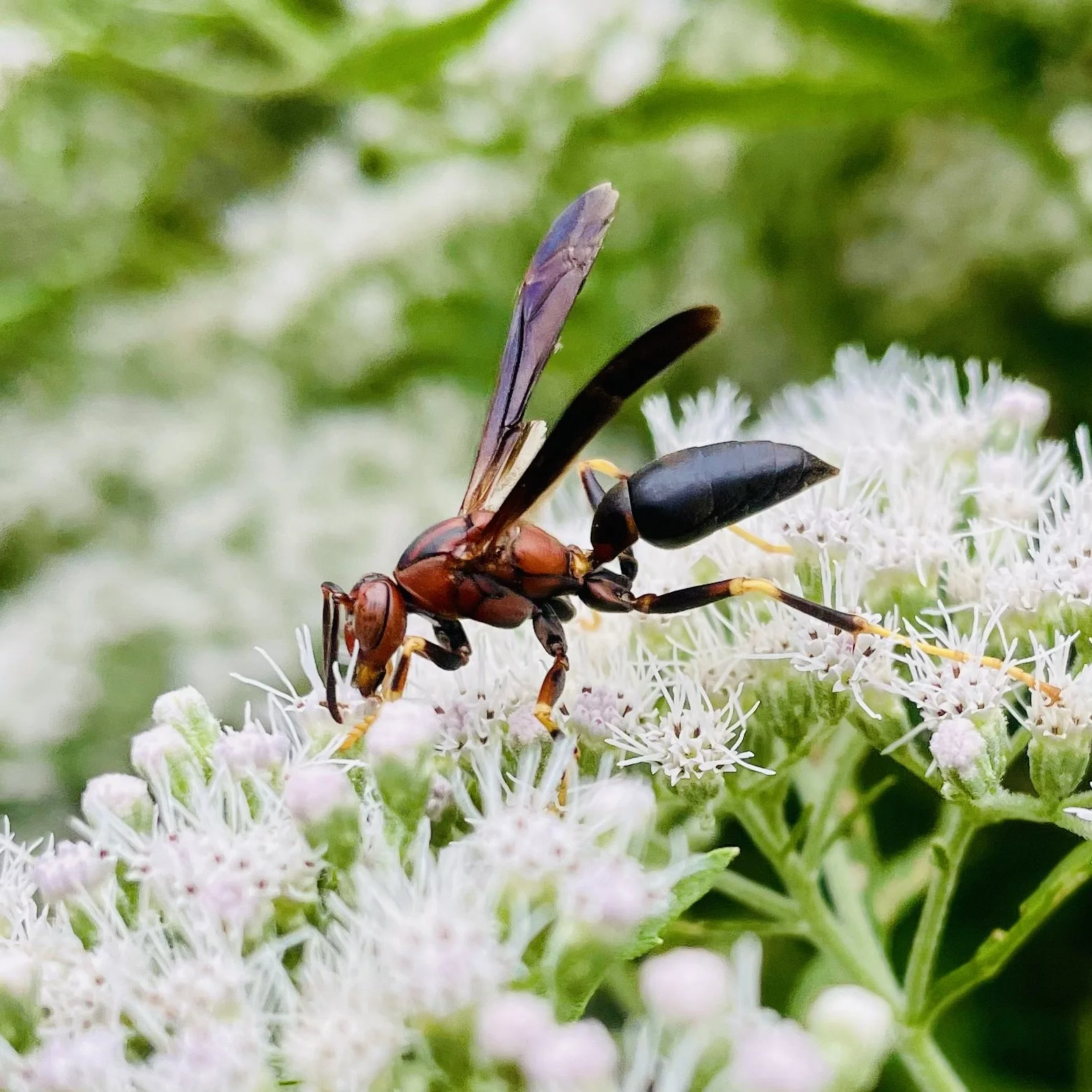
Ringed Paper Wasp (Polistes annularis) on Late Boneset
Bees. The Mid-Atlantic region has around 500 species of native bees. Bees require pollen, their primary source of protein. However, not all pollen is accessible to every species, nor is all pollen suitable for every species. Around 30% of the region’s bees fall under this category. They are called specialists, due to their very limited diet.
Specialist bee adaptations may relate to their size, hairs, or mouth parts. These adaptations grant them exclusive access to specific plants. These bees only live 4-6 weeks, when their particular host plant(s) are in bloom.
Most of our native bees are solitary. They do not live in hives like the highly social European honey bee. For example, leaf-cutter bees live in hollow stems and miner bees live in the ground. Cutting back stems in the winter provides leaf-cutter bees with nesting locations but they won’t use them until the following year. So native gardeners must be prepared to leave their stems for at least two years!
Wasps. Wasps are important pollinators. They also provide natural pest control, preying on caterpillars and other garden pests. The Mid-Atlantic region is home to several species of wasps. They are divided into two categories: solitary and social. Most of the region’s wasps are solitary. Solitary wasps are not aggressive towards people. They include the cicada killer, mason wasp, mud dauber, potter wasp, and sand wasp. Social wasps can be aggressive when defending their nest from a perceived threat. They include the bald-faced hornet, paper wasp, and yellow jacket. Their nests only last one year, dying off with the first frost. Old nests are not reused.
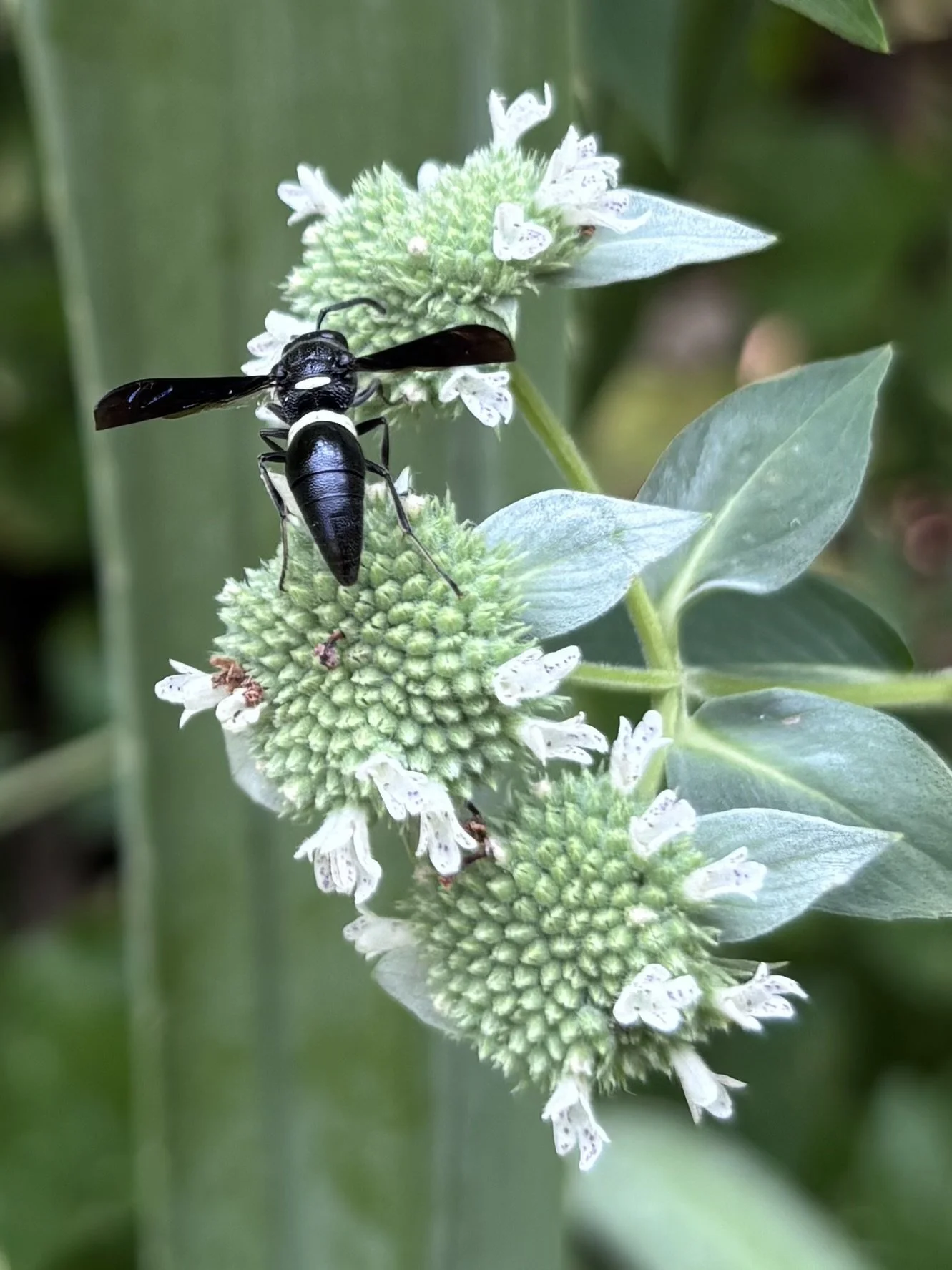
Four-Toothed Mason Wasp (Monobia quadridens) on Clustered Mountain Mint
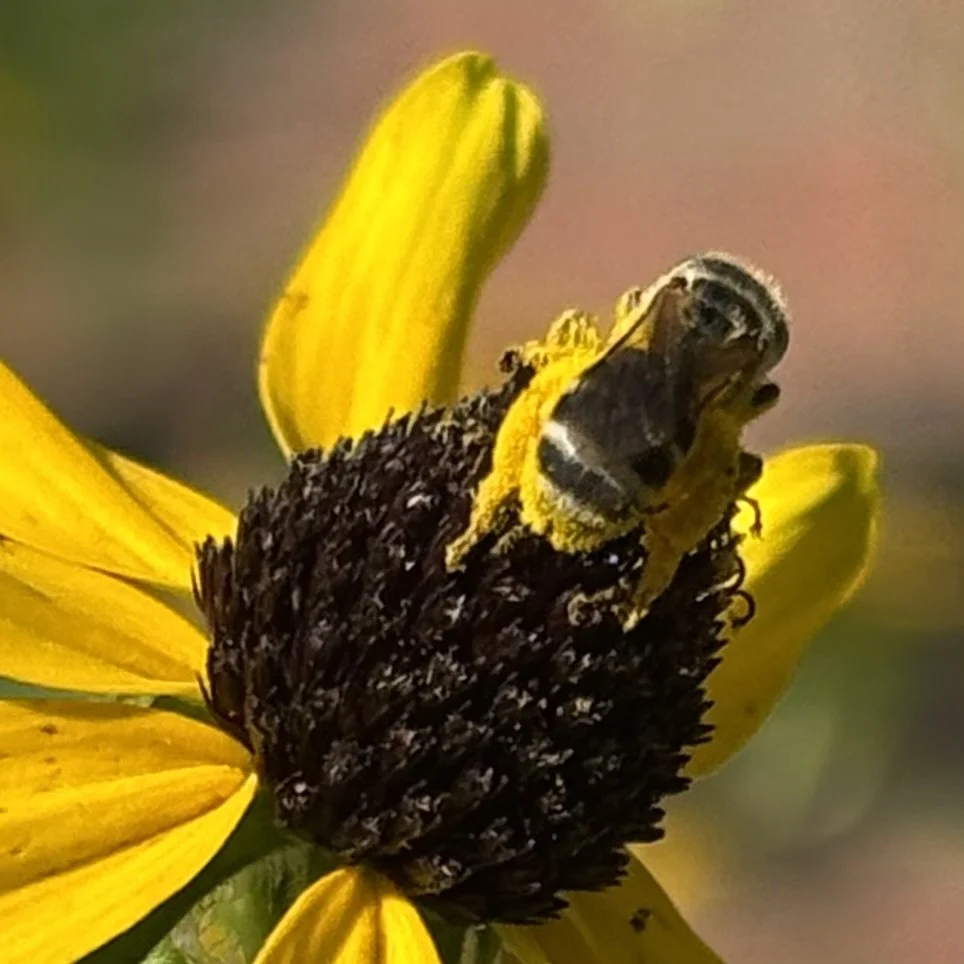
Native Bee Covered in Pollen on Brown-Eyed Susan