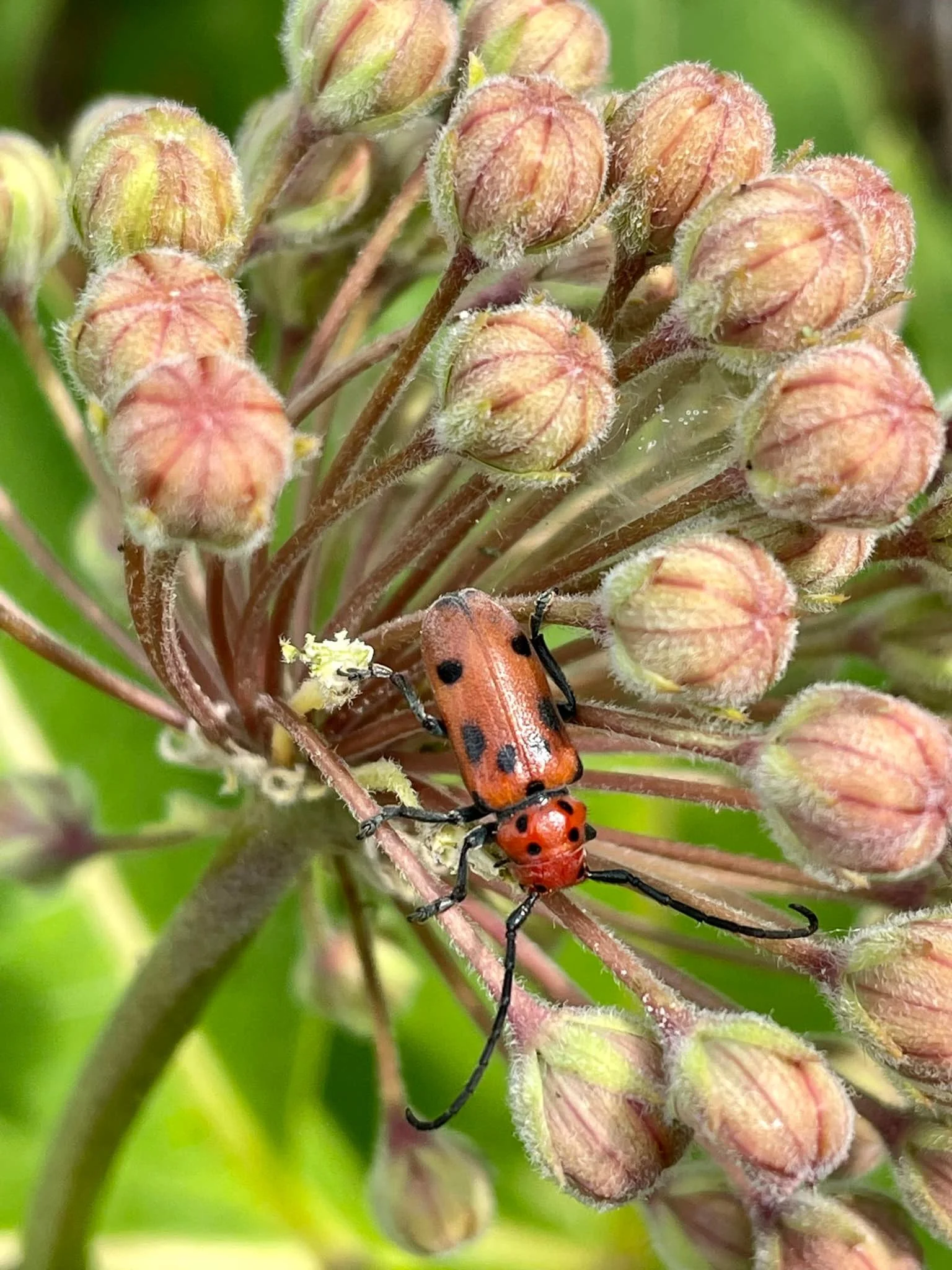
Milkweed Bug on Common Milkweed
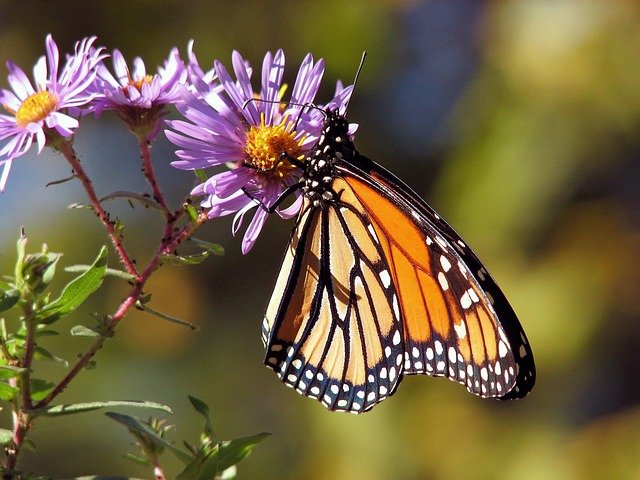
Monarch on New England Aster
native plants
Native plants are indigenous to a specific region, occurring naturally since before European settlement. Native plants and the regional wildlife that depend on them have co-evolved over thousands of years, forging complex relationships. In any given relationship, one or both organisms may have acquired special adaptations that render them dependent on the other for survival. This is especially true for insects. These specific plant-dependent insects are called specialists.
Specialist insects can only digest the very limited suite of plant chemistries associated with their host plant. Better pollen digestibility (insects) and more efficient pollination (plants) are two important benefits of this close physical association.
The Monarch butterfly-milkweed association is the most well-known symbiotic relationship. The Monarch butterfly can only lay eggs on milkweed, the caterpillars’ food source. But there are hundreds of regional examples, just like this one! For example, Asters are the host plants for the Pearl Crescent. Golden Alexander and other members of the Apiaceae family are host plants for the Black Swallowtail. White Turtlehead is a host plant for the Baltimore Checkerspot and Wild Petunia is a host plant for the Common Buckeye. Native plant communities ensure the survival of all of our native insects. But why do insects matter?